
When you need garage door balancing across the greater Seattle area, you want more than a phone number — you want a local crew that answers, shows up on time, and fixes it right the first visit. Our company is headquartered at 6309 24th Ave NW, Seattle, WA 98107, and our service trucks cover Greater Seattle, the Eastside, South King County, Snohomish County, Pierce County, and the Kitsap Peninsula seven days a week.
The fastest way to get help is simply to call (253) 264-0988 — we answer, we schedule, and in most cases we are there the same day.
Need it fast? Ballard Garage Door offers same-day garage door balancing across the greater Seattle area. Diagnosis starts on the phone, pricing is in writing before work begins, and our trucks stock the parts to finish most jobs in one visit. Reach us seven days a week at (253) 264-0988.
At a glance — same-day service: yes · emergency response: 24/7 · written quote before work: always · brands covered: all major manufacturers · service area: the Seattle metro and the greater Puget Sound region.
About garage door balancing
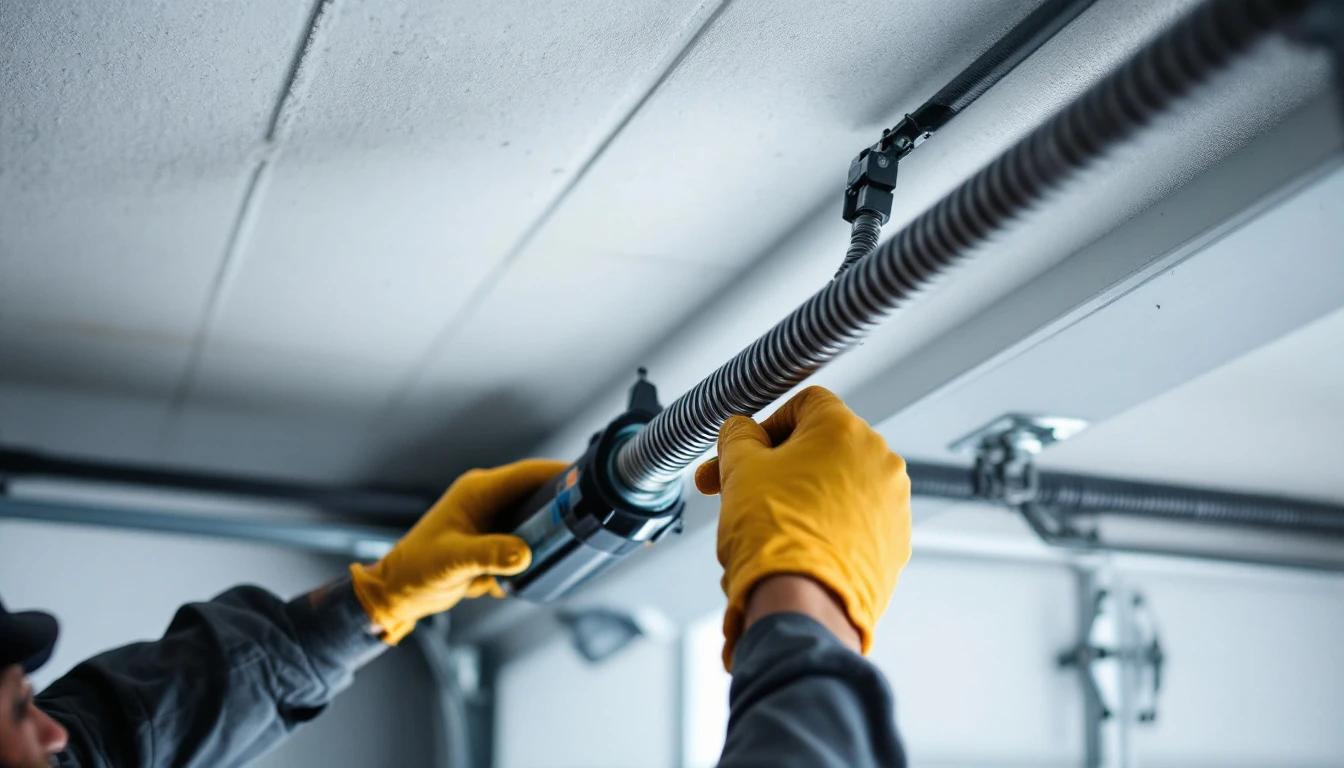
Fine-tuning spring tension so your door floats, not fights. As part of our garage door spring replacement offering, this work is performed by the same senior technicians, with the same parts standards and the same written warranty. During the appointment we also inspect the safety cables, center bearings, torsion springs, since these components age together and are cheapest to address in one visit.
Built for Northwest garages
Our service area runs from the Kitsap Peninsula across Seattle and the Eastside, north through Snohomish County and south into Pierce County — and every corner of it has its own mix of doors, openers, and weather exposure. That breadth is why we train on every major brand and stock our trucks for one-visit repairs rather than parts-ordering delays.
The Pacific Northwest climate shortens hardware life: rain corrodes springs, moss and grit foul tracks, and windstorms knock out power — and photo-eye alignment — more often than anywhere else we know. We build our recommendations around those realities, not around a national script.
When to call about garage door balancing
Garage doors almost always warn you before they fail completely. Across the greater Seattle area, these are the signs we hear about most often when customers call about garage door balancing:
None of these get better on their own. A door showing these signs is telling you a component is at the end of its life, and addressing it now is always cheaper than the emergency version of the same repair.
- The opener strains, stops, or lifts the door a few inches then quits
- The door slams down faster than it should
- The door feels extremely heavy to lift by hand
- Frayed cables or a crooked door caused by uneven spring tension
- A visible gap in the spring above the door
- A loud bang from the garage followed by a dead door
Five safe steps while you wait
Before any tools come out, protect yourself and the door with these five steps:
- Stop using the door. Cycling a damaged door multiplies the damage and can be dangerous. Leave it in its current position — especially if it is crooked, off its tracks, or a spring has visibly failed.
- Keep people, pets, and vehicles clear. A compromised door can shift or fall without warning. Keep the area beneath and around it clear until a technician has secured it.
- Do not pull the red release cord with the door up. If a spring or cable has failed, releasing the opener while the door is raised can let it free-fall. Only use the manual release when the door is fully closed.
- Note the symptoms. A ten-second observation — noises, blinking lights, slack cables, visible gaps in a spring — often tells us the exact failure before the truck rolls.
- Call (253) 264-0988. A real person answers, walks you through anything that can be safely checked, and dispatches a stocked truck — usually the same day.
Why garage door balancing fails — and why it fails here
Every failed component tells a story, and our diagnostic process reads it before we touch a wrench. The most common driver is simple cycle fatigue: standard springs are rated for roughly 10,000 cycles, which at four cycles a day is less than seven years of normal use. Our wet climate compounds the wear — corrosion weakens metal parts while washed-out lubricant lets friction finish the job.
Installation quality matters just as much. Builder-grade hardware, undersized springs, misaligned tracks, and skipped reinforcement struts all shorten a door's life — problems that show up five to ten years later as the failures we are called to fix. When we take on garage door balancing, we correct these underlying issues rather than bolting a new part onto an old problem.
Our process: simple, honest, done right
Here is exactly what happens when you hire Ballard Garage Door for garage door balancing across the greater Seattle area:
- Call and phone diagnosis. Describe what the door is doing and we will usually identify the likely failure before the truck rolls, so we arrive with the right parts for the Seattle metro on board.
- A 25-point system inspection. We never quote off a glance. The tech measures the door, weighs its balance, and checks every wear point so the estimate covers what the door actually needs.
- Approve the exact price first. We present what is wrong, what it costs to fix, and what can safely wait. You decide; we never start work on a number you have not seen.
- Expert repair, done that visit. Our trucks stock the springs, cables, rollers, seals, and opener parts that fit the doors common across the greater Seattle area, so the overwhelming majority of repairs finish in one appointment.
- Proof before we pack up. Every job ends with a full operational test — balance, limits, force, and safety reversal — plus a walkthrough so you see exactly what was fixed and why.
Honest pricing, explained before we start
Honest pricing is the fastest way to earn trust, so here is how ours works. The cost of garage door balancing depends on a handful of concrete factors: the parts involved and their grade, the door's size and weight, how the failure has affected neighboring components, and whether after-hours response is needed. Every quote is itemized and approved by you before a single tool comes off the truck — and we stand behind the number.
Beware of too-good-to-be-true advertised prices around the Seattle metro — a "$49 spring special" is an entry fee, not a repair price. We quote cycle-rated parts, real warranties, and complete jobs. It is sometimes not the cheapest number you will hear — it is the one that is still true when the truck leaves.
When you need it fixed today
Speed matters when your car is trapped or your home will not secure. We offer same-day service across the greater Seattle area whenever our routes allow — which is most days — and true emergency dispatch for trapped vehicles, doors stuck open, and failures that leave your home unsecured. Our dispatcher gives you a real arrival window and a heads-up call when the technician is on the way — the basic courtesies that are strangely rare in this trade.
Why choose Ballard Garage Door
We win customers from big national brands every week. The reasons are not complicated:
- Respect for your home. Shoe covers, clean work areas, and a door left safer than we found it.
- All brands, all ages. From 1970s hardware to this year's smart openers, we repair what others only replace.
- Real warranties. Parts and labor backed in writing, because a repair you cannot trust is not a repair.
- Same-day service on most calls. Trucks already routed through your area, stocked for one-visit repairs.
- Locally owned, Ballard-based. Decisions are made in Seattle, not a franchise office — and our reputation lives where we do.
- Upfront, written pricing. The quote comes before the work, and the quote is the bill.
Where we work
Ballard Garage Door serves Greater Seattle, the Eastside, South King County, Snohomish County, Pierce County, and the Kitsap Peninsula from our Ballard headquarters at 6309 24th Ave NW, Seattle, WA 98107. Our daily routes cover more than sixty cities across four counties, which is how we keep same-day promises honest.
Explore related services and areas
Looking for something more specific? These nearby pages cover the services and communities our customers ask about most:
Garage door terms worth knowing
A little vocabulary makes every repair conversation clearer. The terms that matter most:
- Travel limits — the opener settings that tell the door where "fully open" and "fully closed" are. Drifted limits cause doors that stop short or slam.
- Photo eyes — the two small sensors near the floor on either side of the opening. If their invisible beam is broken or misaligned, the door refuses to close.
- Cycle rating — how many open/close cycles a spring is engineered to survive. High-cycle upgrades (25,000+) cost modestly more and last several times longer.
- Extension springs — older-style springs that stretch along the horizontal tracks. Always installed in pairs, and always with safety cables through the coils.
- Bottom bracket — the fixture at each lower corner anchoring the lift cable. It is under full spring tension and should only ever be touched by a professional.
Get garage door balancing across the greater Seattle area today
Ready to get it fixed? One call to (253) 264-0988 gets a stocked truck and an experienced technician headed your way, usually the same day. We serve across the greater Seattle area seven days a week.
Frequently asked questions
How long does a typical repair take?
Usually one visit and under two hours for standard repairs. The phone diagnosis lets us load the right parts, which is the difference between "fixed today" and "we'll order it."
The power is out and my door won't open — what do I do?
With the door fully CLOSED, pull the red emergency release cord straight down; the door can then be lifted by hand. If it feels extremely heavy, stop — that indicates a spring problem, not just a power outage. When power returns, most openers re-engage automatically on the next cycle.
Is it safe to use the door before you arrive?
Please don't, if anything looks crooked, slack, or broken. Cycling a damaged door multiplies the damage and can be genuinely dangerous. Leave it where it is; we handle unsafe doors every day.
What should I do while I wait for the technician?
Keep vehicles, kids, and pets away from the door, do not cycle it repeatedly, and if it is stuck open, do not force it closed. If you can safely unplug the opener, that prevents anyone triggering it remotely. The technician handles everything else.
How long do garage door springs last?
It is measured in cycles, not years: ~10,000 for standard springs. A busy household burns through that in five to seven years, and Puget Sound moisture shortens it further — one reason we recommend cycle-rated upgrades.
Should I replace both springs if only one broke?
On a two-spring door, yes — both springs have identical wear, and the survivor usually fails within months, costing you a second service call. Replacing the pair also keeps the door balanced evenly, which protects the opener.
Can I just repair one part, or do I need a whole new door?
Nine times out of ten, a repair solves it. We give you the straight math either way — what the repair costs now, what the door likely needs soon, and when replacement is actually the cheaper path.
Do you provide documentation for insurance or home warranty claims?
We do — written, itemized estimates and photos on request. We cannot promise what your policy covers, but we make sure the paperwork gives your claim its best chance.
Can you make my garage door work with my phone?
Almost always. Many existing openers accept a smart retrofit hub, and every new opener we install offers app control — open/close from anywhere, alerts when the door operates, and scheduled auto-close. We set it up and test it before we leave.
Do you service my brand of door or opener?
Almost certainly. We repair LiftMaster, Chamberlain, Genie, Craftsman, Marantec, Overhead Door, and more, plus doors from Clopay, Amarr, Wayne Dalton, CHI, and others — including discontinued and legacy systems many companies refuse.