Springs, keypads, seals or a new door? Ballard Garage Door's guide to garage door repair and replacement across Seattle and the Eastside.
A garage door is the largest moving object in most Puget Sound homes. It is also one of the most neglected. It opens and closes several times a day, usually without anyone thinking about it, until the morning it stops halfway up, slams down, or won't respond to the wall button. By then a small problem has often grown into a bigger one.
At Ballard Garage Door, we are a locally owned shop based at 6309 24th Ave NW, and our technicians work in garages from Seattle's older bungalow neighborhoods to newer builds in Pierce County and on the Kitsap Peninsula. The same handful of problems come up again and again, and many of them can be caught early. This guide covers what we see, what it usually means, what you can safely check yourself, and when to call a professional.
We have organized it by problem and by place. Where a repair matters in a specific community, such as springs in Renton or Redmond, keypads in Edmonds, or full replacements in Bellevue and Mercer Island, we say so. The principles apply across the region.
How Puget Sound Weather Wears on a Garage Door
Our climate is gentler on garage doors than a cold-snap, heavy-snow climate would be. It is not easy on them, though. Months of damp, overcast weather keep moisture in contact with the bottom edge of the door, the weatherstripping, the lower track brackets, and any wood trim or wood-composite panels. Our technicians see swollen and rotting bottom sections, rusting fasteners, and rubber seals that have gone brittle or flattened. Homes near the Sound or Lake Washington deal with extra humidity, and tree cover brings needles, moss, and debris that collect in tracks and on rollers.
Temperature swings matter too. When a cold snap follows a long wet spell, metal contracts, lubricants thicken, and a door that was marginal can become a problem. Springs and cables carry the door's weight and are under tension all the time, so they take the brunt of this.
Housing stock plays a role as well. Many Seattle homes, especially Ballard's older Craftsman bungalows and detached alley garages, have non-standard door sizes, older wood doors, and openers that have been patched over several decades. Ramblers and split-levels built in the middle of the last century are common in the northern suburbs. Newer developments on the Eastside and around Bonney Lake tend to have insulated steel doors and more modern openers, but they bring their own issues, such as builder-grade hardware that is now reaching the end of its service life.
Spring Problems: The One Repair You Should Not DIY
Garage door springs do the lifting. The opener only guides the door and supplies a bit of assistance. Most residential doors use either torsion springs, mounted on a metal shaft above the door opening, or extension springs, which run along the horizontal tracks on each side. Either type stores a great deal of energy. Springs are rated for a certain number of open-and-close cycles, and eventually every spring wears out and breaks. How soon depends on how often the door is used and how well the hardware is maintained.
Signs of a spring problem include:
- A loud bang from the garage, often followed by a door that won't lift
- A door that feels very heavy when you lift it by hand with the opener disconnected
- A visible gap in the coil of a torsion spring
- The door lifting unevenly or hanging crooked
- An opener that strains, hums, or reverses without the door moving
If you see any of these, stop using the opener. Running it against a broken spring can damage the opener's gear or drive components and can pull the door out of alignment. Do not attempt to adjust or unwind springs yourself, because the winding bars and the stored tension can cause serious injuries.
Our technicians handle garage door spring repair Redmond homeowners need, and the same goes for garage door spring repair Renton residents call about. In both areas, we often find that a second spring is nearly as worn as the one that broke. It is usually worth replacing springs as a pair so the door stays balanced and you aren't called back for the other one in a few months. A proper spring job also includes inspecting the cables, drums, bearings, and rollers, since a new spring on a frayed cable only moves the failure point.
Matching the spring to the door is critical. Springs are sized for the specific weight of the door, so a swap that ignores a newly added insulation layer, a custom glass panel, or a wood overlay will leave the door out of balance. A correctly balanced door should stay in place when lifted halfway by hand.
Keypads, Remotes, and Opener Troubles
Not every opening problem involves the door itself. Often the issue is the control system: the keypad, the remotes, the wall button, the safety sensors, or the logic board in the opener.
Keypads take a lot of abuse. They sit outside, getting hit by rain, spray from passing cars, and the occasional bump from a bike or a garbage bin. Typical failures our technicians find include dead batteries, corroded contacts behind a cracked cover, worn buttons that no longer register a press, and keypads that have lost their sync with the opener after a power outage or an opener replacement.
Before you assume the keypad is dead, try a few quick checks:
- Replace the battery with a fresh one and check that the contacts are clean and dry
- Check whether your remotes also fail, which would point to the opener or its antenna rather than the keypad
- Look for moisture or cracks in the keypad housing
- Try re-programming the keypad following the opener manufacturer's instructions
- Confirm the wall button works, which tells you the opener's motor and logic board are alive
If the keypad still fails, replacement is usually quick and inexpensive compared with other garage door repairs. Garage door keypad replacement Edmonds homeowners ask us about often involves a keypad exposed to the damp, salty air off the water, where cheaper units tend to corrode faster. When we replace a keypad, we make sure the new unit is compatible with your opener's brand and code format, since older fixed-code openers and newer rolling-code openers are not interchangeable. If your opener is quite old, we may suggest an opener upgrade, because modern units add features such as battery backup and better security.
Safety sensors are another common culprit. If the door closes partway and then reverses, or the opener light blinks and the door won't close, look for a dirty lens, a bumped sensor that is slightly misaligned, or something blocking the beam. Wipe the lenses with a soft cloth and check that the indicator lights on both sensors are steady. Never bypass the sensors, since they are what stops the door from closing on a child, a pet, or a vehicle.
Bottom Seals and Retainers: The Small Part That Keeps Water Out
The rubber seal along the bottom of your door does a big job in our climate. It blocks rain, wind, leaves, and pests, and it helps hold the garage's temperature. That seal slides into a retainer, a channel fastened along the bottom edge of the door. When the rubber is torn, the retainer can be damaged or corroded too, and simply pushing a new seal into a bent or rusted retainer rarely works for long.
We commonly see seals that have shrunk or pulled out at the corners, retainers that have been dented by a vehicle bumper or a hand truck, and wood or composite door bottoms that have soaked up water and no longer hold fasteners. If you can see daylight under the door, find water pooling inside after a storm, or notice a persistent musty smell, the seal and retainer need attention.
Garage door bottom retainer replacement Issaquah homeowners ask about is often tied to the area's wetter, tree-heavy lots, where lower door sections stay damp and covered with debris. A proper repair means measuring the door's width and the retainer style, since there are several profiles, then replacing the retainer and seal together. If the bottom panel itself has rotted or delaminated, the better fix may be replacing that section or the whole door, because new hardware won't hold in soft material.
Lynnwood and the Older-Home Challenge
The suburban neighborhoods north of Seattle are full of mid-century homes with original or decades-old garage doors. The doors are typically one-piece tilt-up types or sectional doors with several sets of worn rollers and hinges. Lynnwood garage door repair calls often involve this kind of aging hardware: noisy nylon or steel rollers that have flat-spotted, hinges that have cracked at the pivot, tracks that have shifted out of alignment, and cables that have frayed where they wrap around the drum.
These problems often show up together. A door with worn rollers pulls harder against the tracks, which puts more load on the opener and the springs. Fixing only the symptom, such as swapping the opener while the door is out of balance, tends to shorten the life of the new equipment. A good repair visit looks at the whole system: balance, tracks, rollers, hinges, cables, springs, the opener's force settings, and the safety reversal.
Some quick, safe checks you can do between professional visits are listening for new grinding or popping sounds, watching for a door that moves unevenly, and looking for gaps or bent sections in the track. If something looks off, it is better to leave the door alone and call. Loosening or adjusting track brackets on a door under spring tension can let it fall.
When Repair Stops Making Sense: Replacement in Bellevue and Mercer Island
Repair is the right answer for most problems. A new spring, a replacement cable, or a realigned track can give an otherwise sound door many more years. Replacement makes sense when the door itself is the problem: panels that are cracked or delaminating, sections that have been dented and can't be straightened, a door that has been repaired repeatedly, or one that is badly out of style or insulation level for the home.
In neighborhoods with higher-value homes, the garage door has an outsized effect on how the house looks from the street. Garage door replacement Bellevue homeowners consider is often driven by curb appeal and energy performance as much as by wear. Many Eastside homes have attached garages with living space above or beside them, so insulation, a tight perimeter seal, and quieter operation matter. Similarly, garage door replacement Mercer Island residents look into often involves architectural or custom homes, waterfront exposures, and homeowners' associations or design preferences that call for particular materials, window layouts, or colors.
When you are weighing a new door, consider these factors:
- Material: steel, aluminum and glass, wood, or composite, each with different maintenance needs in our wet climate
- Insulation: especially useful for attached garages, workshops, and home gyms
- Window style and privacy: glass panels look great but affect security and heat
- Hardware quality: rollers, hinges, and springs determine how long the door runs smoothly
- Opener compatibility: a new door may need a different opener setup or reinforcement
- Clearances: headroom, side room, and backroom, particularly in older garages with beams or obstructions
- Local rules: some neighborhoods and HOAs have appearance guidelines
Measurements and the existing structure matter more than people expect. Older Seattle garages in particular can have oddly sized openings, rough framing, or limited headroom, and a door that looks right in a catalog may need modified tracks or a different spring setup. A site visit saves headaches.
Paying for Bigger Jobs: Garage Door Repair Financing
Some garage door jobs are bigger than a homeowner expected: a full door replacement, a new opener, or several failed components at once. Because a broken garage door is a security and safety issue, waiting is not always an option. If a larger bill is the obstacle, ask about garage door repair financing when you request an estimate. Our team can explain what options are available so you can decide with the numbers in front of you.
A few practical tips apply no matter how you pay. Get the scope of work in writing, including which parts are being replaced. Ask whether springs, cables, rollers, and hardware will be replaced together or individually. Compare a repair estimate against a replacement estimate when the door is older. Sometimes the numbers are close enough that replacing the door is the better long-term value, and sometimes a targeted repair clearly wins.
When It's an Emergency
Not every garage door problem needs a same-day response, but some do. Emergency garage door service is appropriate when the door is stuck open and you can't secure your home, when it is stuck closed with a car inside and you need to get to work, when a broken spring or snapped cable has left the door unsafe to operate, or when the door has come off its track and is hanging at an angle. A door that has been hit by a vehicle and is partly collapsed is also a hazard.
If you are in that situation, here is what to do while you wait for help:
- Keep people and pets away from the door and don't stand under it
- Don't try to force the door up or down
- Don't touch springs, cables, or the brackets they connect to
- If the door is stuck open, make sure the house's interior door to the garage is locked
- Pull the emergency release cord only if the door is closed and fully supported, since releasing a door that is partly open can let it drop
- Take a photo of any visible damage, which helps the technician prepare
Distance matters in a region this spread out. Calls for emergency garage door repair Bonney Lake residents make come from a growing community on the Pierce County plateau, where many homes are newer and where residents commute long distances, so a door that won't open can disrupt a whole morning. Call early, describe what you see and hear, and ask about availability for your area. We serve King, Snohomish, and Pierce counties and the Kitsap Peninsula, and we will tell you plainly what we can do and when.
A Simple Seasonal Maintenance Routine
Do these checks from the floor and without climbing or loosening anything. Anything involving springs, cables, or brackets under load is a job for a trained technician.
- Look and listen: watch the door run through a full cycle and note any new noises, jerks, or slow spots
- Balance test: disconnect the opener using the release cord with the door closed, then lift it by hand to waist height. It should hold roughly in place. If it drops or shoots up, call for service
- Inspect visible hardware: look for frayed cable strands, cracked hinges, loose bolts, and bent track
- Check the bottom seal: look for tears, gaps, and waterlogged or rotting trim
- Clean the tracks: wipe out grime, needles, and debris, since the rollers should ride in clean tracks
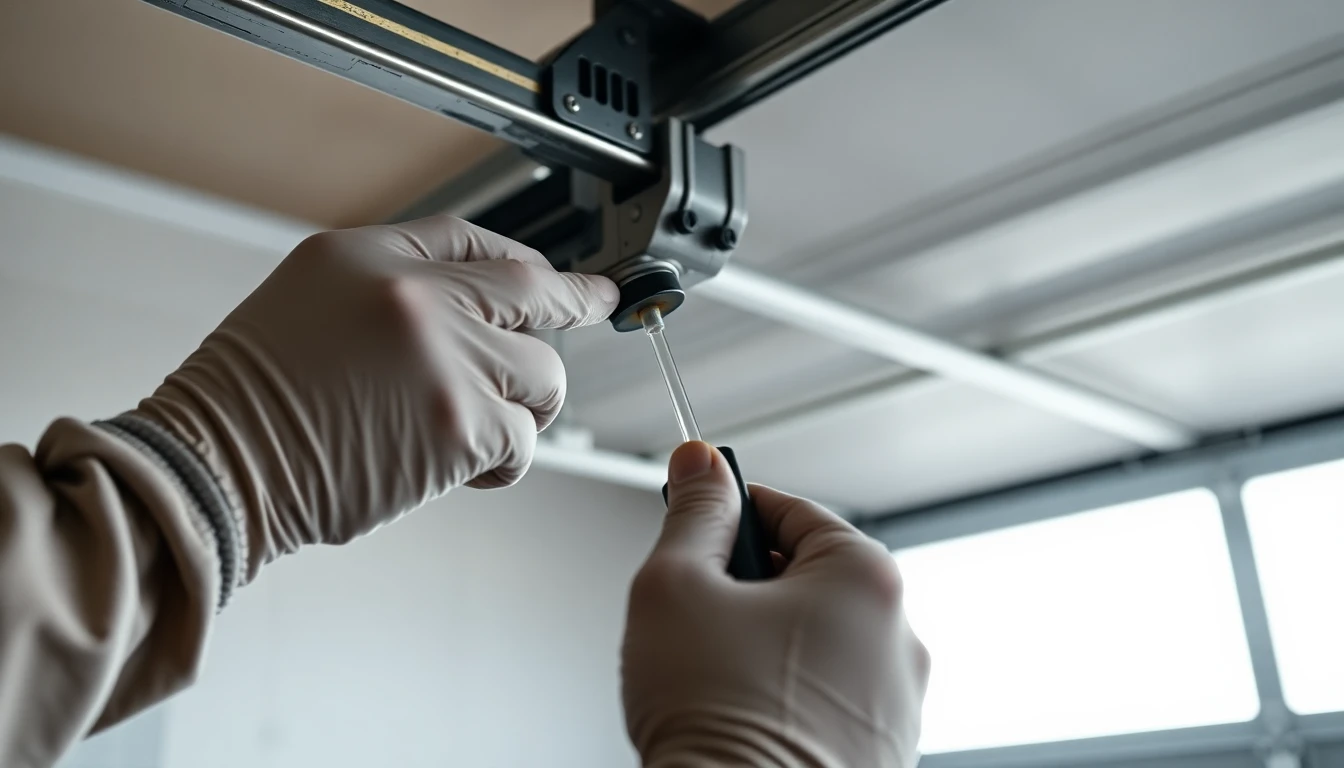
- Lubricate moving parts: use a garage-door-specific lubricant on rollers, hinges, and springs, and avoid heavy grease in the tracks
- Test the safety reversal: place a roll of paper towels or a similar object in the path of the closing door. The door should reverse on contact
- Check the keypad and remotes: replace batteries before they die, not after
Call Ballard Garage Door
Whether you need a spring replaced, a keypad that works, a new bottom retainer, a full replacement, or help after something goes wrong, our technicians can sort out the problem and give you an honest recommendation. We are a locally owned Ballard company and we know the homes, the weather, and the neighborhoods we serve across greater Seattle, the Eastside, South King County, Snohomish County, Pierce County, and the Kitsap Peninsula.
Call Ballard Garage Door at (253) 264-0988 to schedule a repair, ask about a replacement estimate, or get help with an urgent problem. Tell us what your door is doing, and we will help you figure out the next step.